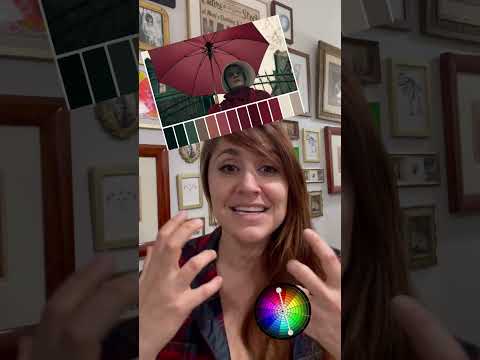

Why Hamnet is Nominated for Best Production Design
Hamnet’s production design travels us back in time through its use of color, texture, and line and form. Watch to see more of these details broken down for a deeper understanding.
Production Designer: Fiona Crombie & Art Director Emily Norris
FULL TRANSCRIPT
I wanna get into why I think Hamnet got nominated for best production design, The film was designed by Fiona Crombie and Art directed by Emily Norris.
For those of you who don't know me, my name is Sarah Cogan. I am an award-winning costume designer with over 20 years of experience. And I teach filmmakers how design tells story because film design isn't a luxury, it's a necessity, and so if you can't afford to have somebody do your design for you, I want you to have the tools so you can make the choices to help your films stand out.
The first thing that I noticed was the texture. The texture in this movie is phenomenal, across the board for all departments they really leaned into this. and as someone who is obsessed with texture, that's where I tend to start as a designer what are the textures of this world.
Very grounded reality that you can feel in your fingers. To me, texture is the number one indicator of a world that we're living in. And I [00:01:00] think every time we make a movie, we're creating a, fantastical world that we're all living in, whether it's set today or it's set, in the Elizabethan era.
In Hamnet. And I think that, Fiona and Emily really captured that. Beautiful texture, natural textures of the world because everything was natural we don't see, plastics or synthetics in it because they didn't exist then, and you really get this beautiful sense of what this world looks and feels like. There's no perfectly smoothed walls. that plaster texture that we see in the film really gave it this beautiful sense of depth and the sense that this was all done by people's hands And the thing that's wonderful about physical texture like that is it actually gives light something to play on. All the beams and structures really feel like they were hand carved. I loved the scene where we see the carpenters shaving down the beams for the globe.
My opinion on production design [00:02:00] is that everything is about how does one location relate to one another location? And how do those locations then also relate to the characters? And in that tells us the story that we're looking at. For example, when we look at. Agnes's brother's house. The beams seem a little more warm and brown. It feels like a warmer, inviting place.
Then we go to William's house and the ceiling seems a little lower, it feels a little more cramped. Have black walls. But one of the things that was also beautiful is they stencil around because wallpaper didn't really exist. And so people would decorate their homes by painting them, which also shows a level of wealth that we don't see with Agnes's family. And I thought that was also a beautiful touch, but that Williams' home has a sense of oppression to it that we don't see in Agnes's world when he first meets her.
When we go to Williams apartment in London devoid of distraction kind of spaces. I thought was such a beautiful contrast to the [00:03:00] very busy, messy, glove shop where will makes gloves with his father there's tools everywhere and in the kitchen there's tools everywhere. All of the, set decorations and the set dressing it all to me felt a lot like still life painting.
One of the sets I really enjoyed was actually the attic wear Will and Agnes sleep. What I loved about it is that they didn't fill it with a lot of stuff. The bed, which is, a marital bed, is often seen as a symbol of a successful marriage. So I thought that was really nice that they left it as this kind of centerpiece. The fire in the relationship kind of gets. Doused, after Hamnet dies and we go from these beautiful red curtains and red dressing, on the bed to this suen sad blue. And that to me felt like this beautiful transition of kind this unraveling between the couple during this period of loss. Because the bed is such a central part of this one set, [00:04:00] to me it was one of the things that made it so beautiful in terms of its simplicity because it just really put the pressure on their relationship and that I really enjoyed.
I also thought it was beautiful and poetic how when Hamnet dies, we see them physically taking away his bed and clearing the space where he once existed, which was also such a painful moment, to see. That's a really wonderful way of showing time, passing, showing the loss of a child. Then they leave and all that history of who he was is gone because they've now cleared out the rooms that the kids live in. And this real sense of that being of a time in the past, and I thought that was very beautifully done, was showing these different kind of time lapse moments of the twins bedroom, which they could have not done, but I think it really helps to. Show that progression of time and the process of grief and loss.
One of the moments that I really enjoyed, that's both costumes and production [00:05:00] design is how after Hamnet passes, Agnes is in this kind of mahogany, brown red dress that actually has her blending into the corner of their room, where the desk is and really kind of fading away in this kind of fire for life that she has and love for William seems to also have died in that moment. And I thought that was kind of a beautiful way of melding the production and costume design in this moment to tell this story.
If you're enjoying this video so far, please hit the like and subscribe button below. It helps other people find this video as well as helps this channel grow, which allows me to make more content for you. And if there's a film that you would like me to break down for you, go ahead and leave a comment the below, and I will get to that as soon as I can. Thanks. All right, let's get back into it.
The other thing that really struck me about Hamnet is it just really felt like they were being very true to the world of the time. It was so impressive on how [00:06:00] the gardens that they had for our families were all very natural. They didn't feel like they were forced. This is before people started transplanting plants from different countries and different regions into their homes and plants being modified to survive different environments. And you really see that and this desire to not make it look perfect, but rather that it feels like a constantly growing and evolving space and life is happening. You see some of the plants that are sad and dying and I thought that was a, such a beautiful poetic moment, whether it was meant to be or not. Here's a story about life and death and, an emotional rebirth at the end with Agnes, so I just thought that that piece was such a beautiful little moment with the gardens that feels very real.
The forest seems to be such a place of connection for Agnes to her family. There's that beautiful scene where, it's Agnes and Will and the three children and they're just being with one another in connection in the forest.
They [00:07:00] saved green for just the forest. We see it in, in the forest where we meet Agnes and then also in the globe as part of the set.
They could have really gone with any kind of scenic backdrop for this, but they chose the forest and I think that it was such a beautiful parallel, because transformation happens in forests. This play becomes a world of emotional transformation for Agnes and this wonderful place for them to kind of reconnect.
You see a lot of these kind of dark holes. Holes in the ground, in the forest underneath the roots of a tree. You've got the dark doorway that goes into the backdrop as an exit in the back of the stage. These kind of voids that we lose people into. He was here, where did he go? Where does one soul go? We don't know. And this kind of dark void that we just don't know where that goes. And I thought that was a beautiful moment as well with the backdrops of [00:08:00] paralleling all of that into these kind of dark moments of, of disappearing
they perfectly draped all those ropes and hung all those backdrops in the globe, was so incredible to me. Like the level of precision that that takes and the time that it would take to perfectly swag, all of those ropes that the backdrops were on, I looked at that and I just thought, wow, that's an incredible level of attention to detail and time, and that they really executed it beautifully.
I later found out that they had actually built the whole Globe theater and that they had made, an entire theatrical space backstage and everything from scratch. And that's also always very impressive and cool because when someone is building a set, you're really having to think of not only the story itself and what you wanna say about the space and the world around the characters, but how these characters are going to physically move and meander through the spaces you're creating and what kind of visual tableaus you're [00:09:00] able to then make with this space you're building. That's one of the things that was so beautiful about the sets that they built for this show. They really felt like they helped the physicality of the story of how people would move through space as well as how does the camera relate and work? Where are the camera shots that can happen? Does a wall need to move in order to get the shot we need to get? And all these kind of details that I think are, really important aspects of how a successful set build really is based on what it can lend in these areas.
They did what are called skins, which is where you create a false wall in front of an existing wall to turn places that might have been renovated into bring them back into the period. That's such a phenomenal thing to do, to shift the way a space feels and the way you might experience a space by adding to what already exists. Those are some of the things that really make this film stand out.
One of the other [00:10:00] things I thought that they did so beautifully in Hamnet was show the difference in worlds between London and the countryside where Agnes loves to be. And there is this sense that London feels very cramped. Buildings that are blocking us in these courtyards we go through, and even when Agnes is walking down the street with her brother, we're seeing either side of the street in that wide shot. And so we're really feeling the world kind of coming in and containing where when we see Agnes out in the forest it's expansive and you get this sense of London feeling like this containing cramping space versus, the expanse of the forest, which makes sense, but also from a story standpoint for Agnes of her kind of coming into this really, tight world that is the opposite of what she is drawn to and what she needs. And this opposite of this woman who needs a lot of space. And nature versus this world that [00:11:00] is all concrete, everything is gray in London, it's drab. even when we go to the Thames and we see Will on the river while you're like, oh, there's sky and it's expansive. It also feels very, I don't know, to mean claustrophobic in the sense that you have the bank walls pressing in and he's being wedged between that and the water. So it also feels like very different from the houses in the country where we spend majority of the story.
So Those are some of my thoughts on Hamnet and why I think it's Oscar nominated. I hope you enjoyed it and I hope it helps you see the film in a new light. Emily and Fiona, good luck at the Oscars. I hope you guys have an amazing time.
no matter what happens If you are watching this and you wanna learn more about film design and how film design tells stories. I have a workshop called Text to Moving Images, where I teach you the psychology behind the five tenets of design, that's color, line and form, texture, scale and [00:12:00] movement, and how you can use all five of these to build the world within your stories and create dynamic characters and worlds that tell a story before they ever open their mouth.
Thanks again for hanging out with me today, until next time, keep telling your stories and shooting your dreams. I'll see you around. Bye.